
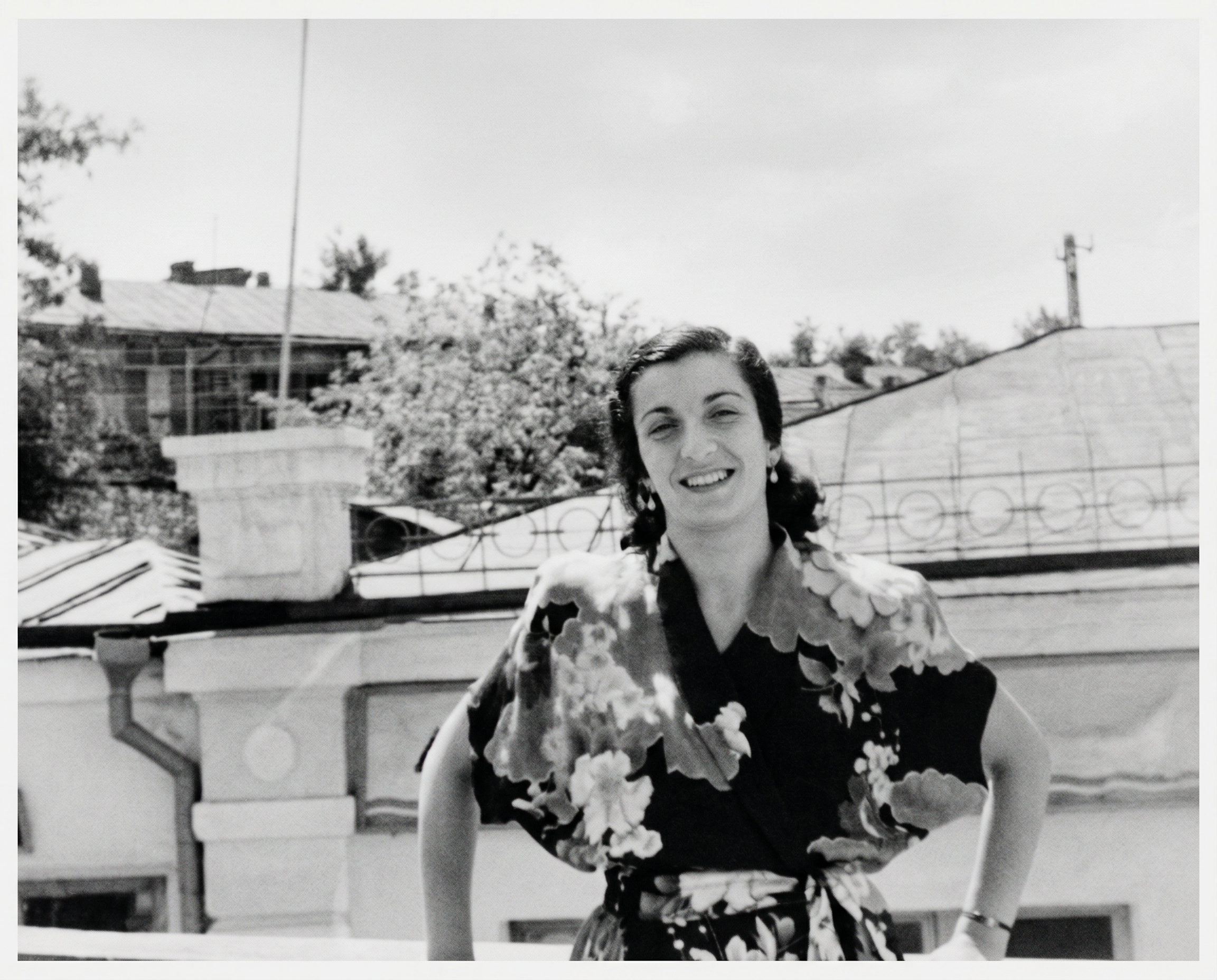
Tatevik Sazandaryan
A living Archive of the book
About the Project
In February 2025, we began a deep archival and biographical research project dedicated to the life and legacy of Tatevik Sazandaryan
Over the course of more than a year, Hrant Yeritskinyan and Artavazd Yeghiazaryan conducted research across the leading cultural institutions of Yerevan:
Literature and Arts Museum
National Archive
National Gallery
Saryan Museum
Spendiaryan Museum
Yerevan State Conservatory
Opera Theatre
We worked closely with Tatevik's family and friends, collecting personal testimonies, diaries, press materials, and interviews.
In total, over 1,000 archival and photographic items were scanned, edited, and restored for the project.
Research Question
How can the life and legacy of Tatevik Sazandaryan be preserved and presented through a combination of original research text personal testimonies, diaries, press materials, interviews and archival imagery, creating a book that not only tells her story, but the story of family that was shaping a nation's artistic identity.
Reasearch Gap
The materials, photographs, documents, press, personal diaries, exist but have never been explored. This book brings them together for the first time in a single text-and-image volume
The Answer
A large-format book that moves between 3 layers:
Text research, context,
Collected monologues from interviews, press, and diaries
Image archival photographs, documents, and visual materials that illustrate and validate what the text describes
Together they make the argument that Tatevik Sazandaryan is not just a historical figure but a cultural event.
book layers
the book is built on 3 parallel layers
Layer One — Visual Journey
Archival photographs, scanned documents, and imagery that carry the reader through Tatevik's life before a single word is read. The visual layer is the entry point — immediate, universal, and primary.
Layer Two — Research Text
Written context that frames each chapter — the era, the cultural landscape, the significance of the period. It gives the reader the knowledge needed to understand what they are seeing and hearing.
Layer Three — Direct Voice & Immersive Objects
Interviews, personal diaries, press clippings, concert posters, television transcripts, and archival documents presented as visual artifacts. This layer does not explain — it immerses. The reader is placed inside the era through the objects and voices that belonged to it.
The book moves from seeing → understanding → feeling.
Chapters
Chapter I — First Steps (1916–1929)
Chapter One follows Tatevik Sazandaryan from her birth in the village of Khndzoresk through her unlikely arrival on the Moscow cultural stage. Born into an intellectual family, she moved to Moscow in 1929 where she worked at a bicycle factory by day and sang at amateur evenings by night. Her talent was noticed at the Armenian House of Culture, where she was admitted to the music and drama studio — the turning point that set her on a professional path. By 1937 she gave her first solo concert, and just two years later she would star in the opera Almast. The chapter establishes the core of who she was: a girl from the mountains with a strong voice, extraordinary discipline, and an unrelenting love for music.
Timeline
YearEvent 1916 Born in Khndzoresk 1929 Family moves to Moscow1932 Joins Velostroy factory, enrolls in Komsomol 1937 First solo concert at Armenian House of Culture1939Stars in Almast
People Mentioned
Tigran Sazandaryan — father; poet, musician, teacher
Aksel Bakunts — writer; student of her father
Ruben Simonov — actor, teacher; spotted her talent
Professor Stepan Barkhudaryan — vocal teacher, came from Italy
Maria Kamoeva — pianist, concertmaster; rehearsed with Tatevik daily
Chapter II — Almast (1930–1939)
Chapter Two tells the story of Armenia's most celebrated opera — from its origins in a 1915 Moscow conversation between Spendiaryan and Saryan, through its premiere at the Bolshoi in 1930, to the defining moment when 22-year-old Tatevik was cast in the title role for the 1939 Decade of Armenian Art in Moscow. The chapter centers on that performance — a huge risk for an inexperienced singer — which became the turning point not only in Tatevik's career but in the history of Armenian operatic culture. Stalin, Beria, Mikoyan, and Molotov watched from the government box; the success was so complete that Molotov issued a special decree to fund the completion of the Tamanyan building in Yerevan. Tatevik herself describes Almast as the most complex and contradictory role she ever performed — a tragic woman torn between duty and ambition — and one she continued to deepen over decades. The chapter is a convergence of personal debut, national triumph, and the birth of Armenian opera as a serious institution.
Timeline
Saryan suggests Almast to Spendiaryan 1918 Russian libretto written by Sophia Parnok 1928 Spendiaryan dies — never sees it staged 1930 World premiere at Bolshoi branch, Moscow 1933 Armenian Opera Theater opens (Not in main building) with Almast 1937 Lisitsyan arrives in Yerevan; first meets Tatevik 1938 Tatevik assigned the role of Almast 1939 Tatevik premieres as Almast — Decade of Armenian Art, Moscow at Bolshoi Theatre
People Mentioned
Alexander Spendiaryan — composer; died 1928
Hovhannes Tumanyan — poet; source of the libretto
Martiros Saryan — painter; designed all sets and costumes
Sophia Parnok — wrote the Russian libretto
Maria Maksakova — first ever Almast, 1930
Gevork Budaghyan — conductor; founder of Armenian Opera; prepared Tatevik
Ruben Simonov — artistic director of the Decade
Alexander Melik-Pashayan — musical consultant; approved Tatevik mid-monologue
Pavel Lisitsyan — sang Tatul alongside Tatevik
Galust Gabrielyan — sang the Ashugh
Armen Budaghyan — opera historian; Gevork's son; eyewitness source
Dmitri Shostakovich — praised the production publicly
Edward Mirzoyan — composer; called Tatevik's Almast the most perfect embodiment
Haykanush Danielyan — opera singer; witnessed the debut
Vera Davidova — opera singer; saw the 1939 Moscow performance
Sergey Mikhalkov — poet; praised Tatevik in press
Chapter III — Hakob Khanjyan (1905–1968)
Chapter Three tells the story of Tatevik's husband — musician, cultural administrator, and the quiet force behind much of her career. Born in Van and raised in Tbilisi, Hakob Khanjyan came from a family that fled the Genocide just before it began. He trained in Yerevan and Leningrad, returned to work as concertmaster at the Opera, and met Tatevik there — the two literally sharing the same stage during Almast, he in the orchestra pit, she on the throne. During the Second World War he led the Armenian division's variety orchestra, performing hundreds of front-line concerts — a period immortalized by writer Hrachya Kochar, who based a short story directly on Hakob, describing him playing violin at midnight in a forest clearing near the front line, dreaming of Tatevik and the Bolshoi. After the war he rose through the cultural hierarchy — director of the Philharmonic, then the Opera, then head of the Arts Department of Armenia's Ministry of Culture. His death in 1968 ended Tatevik's operatic career. She never returned to the stage. The one exception was Sayat-Nova — because Hakob had co-written the libretto.
Timeline
Family flees Van before the GenocideEarly years Education in Tbilisi, then Yerevan Conservatory, then Leningrad 1939 Plays violin in orchestra during Tatevik's Almast debutWWIILeads Armenian division variety orchestra; front-line concerts1946Kochar's story The Song published — based on HakobPost-warDirector of Philharmonic, then Opera; Head of Arts, Ministry of Culture1968Passes away — Tatevik retires from the stage
People Mentioned
Sepuh & Vergine Khanjyan — Hakob's parents, originally from Van and Erzinka
Grigor Khanjyan — Hakob's younger brother; famous painter
Azat Manukyan — Hakob's first music teacher; family friend from Erzinka
Tatevik Baghdasaryan — Hakob's niece; eyewitness source on their relationship
Hrachya Kochar — Armenian writer; based The Song on Hakob at the front
Artavazd Yeghiazaryan — recorded the Baghdasaryan testimony
Chapter IV — her characters
Chapter Four and five moves away from biography and into artistry— cataloguing the gallery of women Tatevik built across her career. The chapter opens with Arshak II, the first Armenian opera, composed in 1868 but suppressed by Ottoman authorities and only staged in 1945, with Tatevik as Parandzem — a role she described as her most patriotically meaningful, performed just as the Second World War ended. The chapter then moves through her wider repertoire: Carmen, Aida, Jocasta in Oedipus Rex, and Armenian roles written specifically for her voice. Critics consistently noted the same quality across all of them — she never repeated herself, finding a completely distinct physical and vocal identity for each character. The chapter closes with Sayat-Nova, composed by Alexander Arutiunian in collaboration with Hakob Khanjyan, premiering in 1969. It was Tatevik's final major role — and the reason she performed it, despite having left the stage after Hakob's death the year before, was that her husband had co-written it.
Timeline
Year Event 1868 Arshak II composed by Chukhajyan in Constantinople 1945 Arshak II premieres in Yerevan — Tatevik as Parandzem 1963 Arutiunian begins Sayat-Nova with Hakob Khanjyan1968Hakob dies; Sayat-Nova completed1969Sayat-Nova premieres — Tatevik as Anna; her final role
People Mentioned
Tigran Chukhajyan — composer of Arshak II
Armen Gulakyan — director of the 1945 production
Mikael Tavrizyan — conductor; worked closely with Tatevik on Parandzem
Haykanush Danielyan — opera singer; praised Tatevik's Parandzem
Revaz Gabichvadze — Georgian composer; reviewed her Jocasta
Alexander Arutiunian — composer of Sayat-Nova
Dmitri Shostakovich — advised Arutiunian during composition
Vera Davydova — Stalin's favored Carmen; the political reason Tatevik's Carmen stayed in the shadows
Chapter V — world
Chapter Five follows Tatevik beyond the Soviet Union into the wider world — Iran, Syria, Lebanon, Belgium, France, Luxembourg, Greece, Hungary, Czechoslovakia, Sweden, Switzerland, and Algeria. The chapter is built largely through her own writing and foreign press reviews, making it one of the most personal in the book. Her Syria and Lebanon account is vivid and political — describing Armenian-Arab coexistence, friendships with progressive youth movements, and her decision to learn two Arabic folk songs phonetically from scratch, with a 12-year-old boy named Toni as her pronunciation coach. In Iran she performed in Persian; in France she sang in flawless French. Foreign press called her exceptional — Lyon noted her southern temperament, Belgium confirmed she sang every piece in its original language, and Greece described her as one of the nightingales of the Yerevan Opera. The chapter reveals a dimension of Tatevik rarely seen elsewhere — curious, diplomatic, politically aware, and willing to reach toward every audience on their own terms.
Timeline
Year Period / Event 1950sTours to Iran, Syria, Lebanon 1956 Syria & Lebanon tour — Arabic songs debut; article in Soviet Art 1956 Iran — solo concert at Royal Philharmonic Hall, Tehran 1960 Greece — Athens Palace concert 1962Belgium — Le Peigné review1963France — Lyon concert; Dernière Heure review
People Mentioned
Heghine Ter-Ghevondyan — pianist; transcribed Arabic songs on tour
Toni — 12-year-old Arab boy in Damascus; helped Tatevik learn Arabic pronunciation
Arno Babajanyan — arranged the Arabic songs for Yerevan Radio broadcast
E. Elmajian — Armenian dramatic tenor in Beirut; praised by Tatevik
Eliz Tashchyan — young Armenian soprano in Beirut
Maria Avetyan — Armenian soprano in Beirut; sang Aida/Amneris duet with Tatevik
Tigran Jerjian — Armenian member of Syrian Parliament; attended concerts
General Aram Karamanoukian — Commander of Syrian Army Artillery; attended concerts
Chapter VI — Davit Khanjyan (1940–1981)
Chapter Six tells the story of Tatevik and Hakob's son — one of Armenia's most significant conductors, who died at 40 at the height of his powers. Born into a household saturated with music, Davit studied piano and conducting at the Yerevan Conservatory, then continued in Vienna, returning with a European discipline fused to deep Armenian musical instinct. From 1974 he was artistic director and chief conductor of the Armenian State Symphony Orchestra, transforming it into one of the most respected ensembles in the Soviet Union. The chapter's heart is a long, extraordinary tribute by composer Avet Terterian — his closest creative partner — describing ten years of collaboration, artistic battles, mutual devotion, and the specific quality that made Davit irreplaceable: the ability to inhabit silence, to make an audience afraid to breathe. Tigran Mansuryan adds that Davit always stood beside composers, championing new Armenian music at personal professional risk. He died on March 14, 1981, after refusing to stop a concert despite chest pain. Family friend Nana and Seda Khanjyan both describe the grief that followed — and confirm that Tatevik received mourners with composure, showing her pain only to those closest to her.
Timeline
Year Event 1940 Born in Yerevan 1963 Graduates piano, Yerevan Conservatory 1968 Graduates conducting; joins Armenian State Symphony 1968–70s Studies in Vienna 1974 Appointed artistic director and chief conductor 1981 Dies of heart attack aged 40
People Mentioned
Avet Terterian — composer; closest creative partner; wrote the chapter's main tribute
Tigran Mansuryan — composer; friend and collaborator
Robert Andreasyan & Mikael Maluntsyan — Davit's conducting teachers
Lola (Khanjyan) — Davit's wife; daughter of conductor Ispir Kharachyan
Zaya & Tata — Davit's daughters
Nana — family friend; eyewitness to the family's grief
Seda Khanjyan — Hakob's niece; witnessed Davit's rehearsals
Grigor Khanjyan — Davit's uncle; painter; provided protection and freedom
Artavazd Yeghiazaryan — recorded the testimonies
Chapter VIII — Off Stage
Chapter Eight steps away from the opera house entirely and into the private world of Tatevik Sazandaryan — as deputy, neighbor, grandmother, and human being. As a People's Deputy of the Supreme Soviet, she took the role seriously: she prepared speeches in Armenian despite being Russian-speaking in daily life, rehearsed them at home with Hakob, and intervened personally in constituents' problems — including calling government offices directly to exempt a sick young man from military service. The chapter's texture comes from intimate testimonies: her niece Tatevik Baghdasaryan describes a woman of supreme taste who wore the same dress for twenty years if it was beautiful enough, who left hidden notes in Hakob's and Davit's musical scores for her granddaughter Zara to find after her death, and who, when being taken to hospital in 1999, noticed the nurse didn't recognize her and said — in her magnificent bass voice — "Let's forgive her for that." There is also the robbery: two men broke into her apartment, threatened her granddaughter Tata with an iron, and took her rare jewels. When police asked for a description, Tatevik noted that one of the robbers was "quite handsome." She then did everything she could to ensure the young men received the lightest possible sentence.
Timeline
Year Event 1960 Supreme Soviet speech on military reduction — published in Soviet Art1990s Robbery at home — Tata present 1999 Taken to hospital — final period
People Mentioned
Tatevik Baghdasaryan — Hakob's niece; main witness for the home life sections
Nana — family friend; contributed stories about Davit and the family
Zara (Zara Khanjyan) — Davit's daughter; Tatevik's granddaughter; found the hidden notes
Tata — Davit's daughter; Tatevik's granddaughter; present during the robbery
Silvia — beloved household helper
Avetik Isahakyan — poet; a regular visitor; called Tatevik "Deputy" with gentle humor
Martiros Saryan & others — among the cultural figures who visited the home
Chapter IX — Relationships with Contemporaries
Chapter Nine is the most intimate in the book — Tatevik in her own words, reflecting on the people she loved and owed. The chapter opens with her own late-night thoughts about those who shaped her: Hakob as her sternest critic and kindest friend, Lisitsyan beside her on stage, Khachaturian gifting her a rare recording in the rain, Simonov and Barkhudaryan as her first teachers, Tavrizyan whispering before every premiere — "Tatevik, I am with you." Saryan painted her and gave her roses from his own garden. The chapter's emotional center is a scene from 1944: literary critic Arshalooys Arsharuny accompanies Avetik Isahakyan — Armenia's great poet — to Tatevik's first solo concert at the House of Culture. Tatevik had performed a Rachmaninov romance set to Isahakyan's own poem. When it ended, the old poet rose from his seat, walked slowly to the stage, and said only one word — "Zoronas" — be strong, flourish. He gave her a rose from his own garden. Both had tears in their eyes. Tatevik kept that concert program for the rest of her life, the rose pressed inside it. The chapter closes with a poem by Hamo Sahyan, written for Tatevik in 1978, comparing her voice to the bells of Tatev Monastery — sounding through Armenian mountains long after the ringing stops.
Timeline
Year Event 1944 Isahakyan attends Tatevik's first solo concert; the rose moment 1974 Arsharuny publishes the account of the 1944 evening 1978 Hamo Sahyan writes his poem for Tatevik
People Mentioned
Hakob Khanjyan — husband; described as her sternest critic and kindest companion
Zara Doluhkhanyan — friend through joy and sorrow
Pavel Lisitsyan — stage partner across Almast, Carmen, Lyubasha
Aram Khachaturian — gave her a rare recording of his romance In the Rain
Haykanush Danielyan — singer; taught the high culture of Russian vocal art
Vardan Ajemyan — director; helped her become a true acting artist
Ruben Simonov — first teacher in Moscow
Stepan Barkhudaryan — first vocal teacher
Gevork Budaghyan & Mikael Tavrizyan — conductors; pillars of Armenian opera
Avetik Isahakyan — poet; the rose scene; called her "Deputy" with gentle humor
Martiros Saryan — painted her; gave her roses from his garden; wrote tribute
Arshalooys Arsharuny — literary critic; witnessed and wrote the Isahakyan concert scene
Hamo Sahyan — poet; wrote the closing poem for Tatevik, 1978
END
Համո Սահյան
Բանաստեղծ
Հնչել է ձայնը հայոց լեռներում,,
Ինչպես Տաթևի
Տաճարի զանգը անդունդներին ի վար
Ու բարձունքն ի վեր։
Հնչել է ձայնը,
Ու ոլորվել է ղողանջը նրա,
Հասել է բոլոր ծակերն աշխարհի
Եվ մեր բեկված ու շտկված սրտի
Թրթիռը տարել ու շաղ է տվել
Աշխարհի բոլոր ծարավ սրտերի,
Ցամանքների և ծովերի վրա։
Լռել է ձայնը
Ինչպես Տաթևի զանգերն են լռում,
Որոնցից պոկված ղողանջները դեռ
Արձագանքում են հայոց լեռներում,
Անդունդներն ի վար և բարձունքն ի վեր։
Եվ իմ այս երգն էլ
Փոքրիկ մասունքն է այդ արձագանքի․․․
Եվ խոնարհում եմ գլուխս ու քնար
Լռության առջև
Տաթևից առաջ Տաթևիկ-վանքի։
Տաթևիկ Սազանդարյանին, 1978
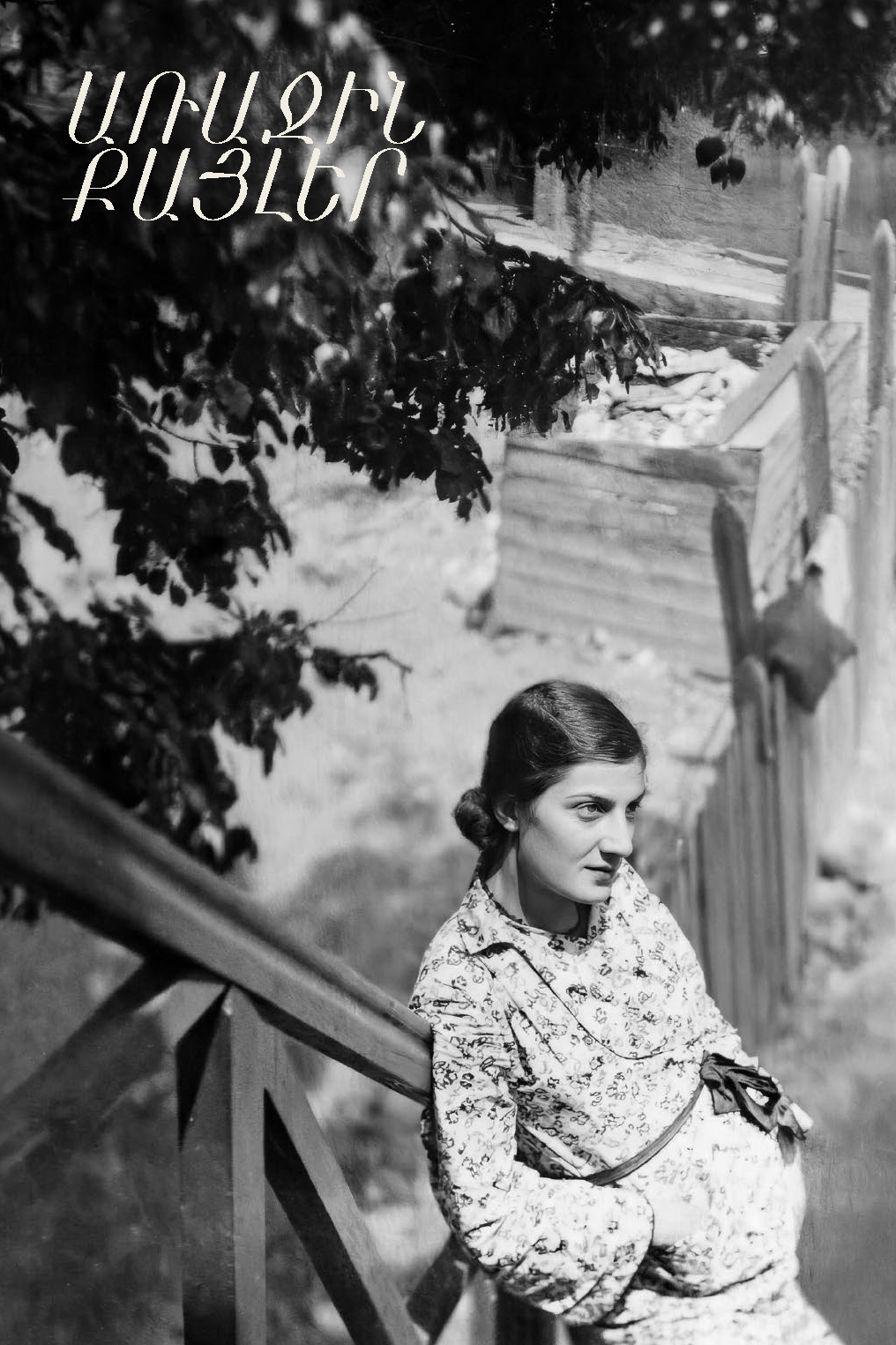
Layout 1 TXT
Layout 2 TXT
Audio Interview
inked Audio Interviews Each quote or testimony in the book links to the original recorded interview.
The reader can choose to listen rather than read — the source becomes audible, not just cited. This adds significant archival credibility and emotional weight.
MArketing
What this book is The first complete archive-driven biography of Tatevik Sazandaryan. Published in the year of her 110th birthday and the Opera Theatre's 100th anniversary. A large-format book built from over 1,000 scanned archival items, original interviews, and family materials.
Who it's for
Armenian cultural institutions — museums, galleries, philharmonias, opera houses
Diaspora communities worldwide
Collectors, designers, and anyone who buys beautiful books
Academic and literary circles
Anyone looking for a meaningful Armenian cultural gift
What makes it different It is a living document. Readers can listen to the original interviews behind every quote. The archive is real, traceable, and audible. The book does not close — it opens.
Three positions, three markets
Cultural monument — tied to two historic anniversaries
Design object — large format, photography-driven, built to be displayed
Institutional gift — for embassies, foundations, delegations, diaspora organizations
Action Plan
Pre-launch
Approach Opera Theatre for official anniversary partnership
Identify 3–5 institutional gift clients for early orders
Begin weekly Instagram releases — archive photos, quote visuals, behind the scenes
Launch
Launch event tied to Opera Theatre centennial program
Press outreach to Armenian cultural media, diaspora press, arts journalism
Release audio preview clips alongside physical book
Post-launch
Distribute to cultural bookstores, gallery shops, diaspora organizations